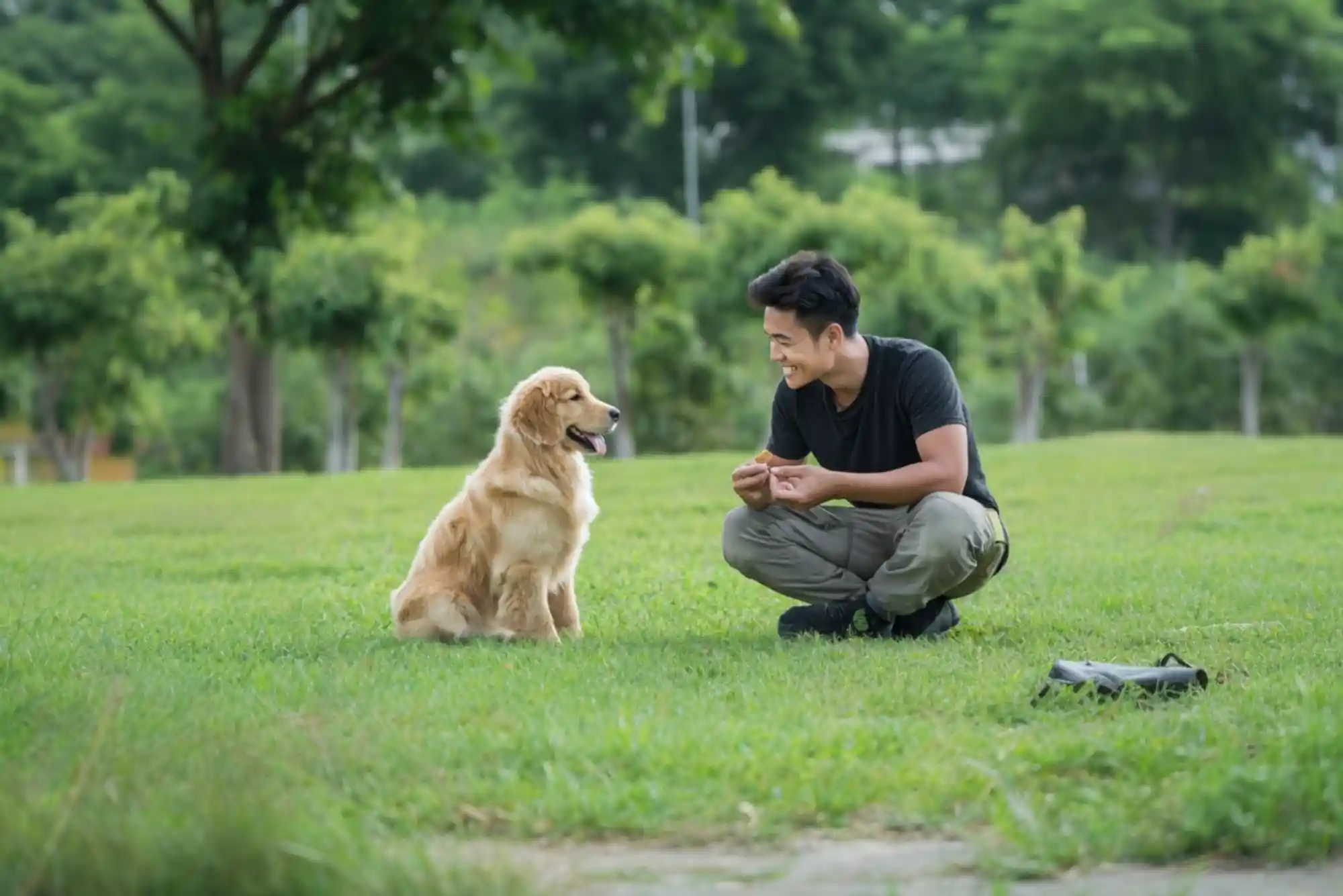
Introduction
An emergency recall command is one of the most valuable skills you can teach your dog. A reliable recall can help you call your dog away from traffic, dangerous animals, open gates, unsafe food, or other situations where a few seconds can make a serious difference.
Unlike an everyday “come” cue, an emergency recall should have exceptional value. Your dog should learn that responding to this particular signal always leads to something wonderful. The goal is not to make your dog obey through fear or punishment. Instead, you build such a strong positive association that turning and running toward you becomes an automatic response.
A reliable recall takes time, repetition, and careful progression. Even well-trained dogs can struggle when distractions become overwhelming, so training should move gradually from quiet indoor spaces to controlled outdoor environments.
What Is an Emergency Recall Command?
An emergency recall command is a special cue used when you need your dog to return immediately. It can be a word, whistle, or unique sound that your dog does not hear during ordinary conversations.
For example, you might choose a distinctive word such as “Here!” or a whistle pattern. The exact cue matters less than consistency and the positive meaning you attach to it.
The most important rule is to protect the cue. Do not use your emergency recall casually throughout the day, and never use it to punish your dog. If your dog repeatedly hears the cue without receiving a worthwhile reward, its value can gradually decrease.

Why a Separate Emergency Cue Helps
Many owners use “come” for everything. They call their dog for dinner, to leave the park, to get into the car, or to stop playing. Over time, the dog may learn that “come” often means the fun is ending.
A separate emergency recall avoids this problem. Your dog learns that the special cue means one thing: immediately turn around and come to you for an exceptional reward.
A reliable recall is never completely guaranteed because dogs are living animals, not machines. The objective is to make the response as consistent and enthusiastic as possible.
Choose the Right Emergency Recall Cue
Choose a cue that is short, distinctive, and easy for everyone in your household to remember.
Avoid a word that you already use frequently. If you normally say “come” dozens of times a day, it may be better to create a new emergency cue.
The cue should also sound positive. A cheerful, confident sound is generally more useful than shouting in anger.
Once you select the cue, keep it consistent. Everyone who trains the dog should use the same signal and follow the same reward rules.
Build a Powerful Positive Association
Before expecting your dog to run across a yard or leave an exciting distraction, teach them that the emergency cue predicts something extraordinary.
Start indoors in a quiet room. Say the emergency cue once and immediately provide a high-value reward. Your dog does not even need to move toward you during these first repetitions.
Repeat this several times during short sessions. The purpose is simply to create an association:
Emergency cue = something amazing happens.
Use rewards your dog genuinely loves. Depending on the dog, that might be small pieces of cooked chicken, cheese, a favorite treat, or an exciting toy.
The reward should be much more valuable than the everyday treats you use for ordinary training.
Teach Your Dog to Run Toward You
Once your dog becomes excited when hearing the cue, begin adding movement.
Stand only a short distance away. Give the emergency recall cue, open your arms, move backward, and encourage your dog to chase you. When your dog reaches you, immediately reward generously.
Your body language matters. Dogs respond strongly to movement and emotional tone. Running away from your dog can encourage them to chase you, whereas chasing a dog that is running away can turn the situation into a game of keep-away.
Keep these early sessions easy. You want your dog to succeed repeatedly rather than discover that ignoring the cue is possible.
Reward the Recall Like a Jackpot
An emergency recall deserves a bigger reward than an ordinary behavior.
When your dog responds, think beyond giving one tiny treat. Give several small pieces in succession, add enthusiastic praise, and provide a favorite game if your dog enjoys toys.
The reward should communicate that your dog made an excellent decision.
This is particularly important because your dog may have been leaving something interesting behind. If your dog abandons a fascinating smell, squirrel, toy, or playmate to return to you, the reward needs to compete with what they gave up.
Positive reinforcement is central to reliable recall training. Trainers also recommend rewarding immediate responses generously and keeping the experience enjoyable.
Teach the “Gotcha” Part of Recall
Coming toward you is only half the emergency behavior. In a real emergency, you may need to grab your dog’s collar or harness quickly.
Some dogs happily run toward their owner but dodge away when a hand reaches for the collar. That can become dangerous when the dog is near a road or another hazard.
Teach a separate “gotcha” behavior gradually.
When your dog approaches, gently touch the collar or harness, reward, and release. Over time, progress toward holding the collar for a few seconds before rewarding.
The dog should learn that being safely caught is not something to fear. Collar-grab exercises are specifically recommended as part of building a reliable recall because they help prepare the dog for physical restraint after coming to you.
Increase Distance Slowly
Once your dog reliably responds from a few feet away indoors, gradually increase the distance.
Call from another part of the room. Then try another room. Later, practice down a hallway or from behind a partially closed door.
Do not increase distance and distractions at the same time.
For example, if your dog can recall perfectly from 30 feet indoors, do not immediately expect the same response from 30 feet away at a busy park. That environment may be dramatically harder.
Successful recall training follows a progression: increase difficulty gradually, and return to an easier stage whenever the dog starts struggling.
Add Distractions Carefully
Distractions are where many recall training programs fall apart.
Your dog may respond perfectly in the kitchen but completely ignore you when another dog is playing nearby. That does not necessarily mean your dog is stubborn. It means the training difficulty has increased too quickly.
Start with mild distractions. You might have another person quietly walking around the room. Later, add toys, outdoor smells, movement, or greater distance.
When your dog succeeds consistently, increase the challenge.
If your dog ignores the emergency recall, do not keep repeating the cue. Instead, reduce the difficulty and practice at a level where your dog can respond successfully. Repeating a cue when the dog is not responding can weaken its meaning.
Practice Outside on a Long Line
Outdoor practice should be controlled.
Even if your dog has an excellent indoor recall, the outdoors introduces smells, wildlife, people, other animals, movement, and countless other distractions.
A long-line leash can provide freedom to move while maintaining physical control. Begin in a secure, relatively quiet area and gradually increase the level of distraction.
A long line should not be used to drag your dog toward you after repeatedly ignoring the cue. Instead, it provides a safety layer while you build the behavior.
Never test an unproven emergency recall by letting your dog loose near roads or other hazards. Even dogs with excellent training should only be off leash where it is safe and legally permitted.
Never Use the Emergency Recall to End Every Fun Activity
One of the easiest ways to weaken recall is to make every successful return mean “fun is over.”
Imagine your dog is happily playing in the yard. You call them, they run toward you, you clip on the leash, and immediately take them inside every time.
Eventually, your dog may learn that coming to you ends the good stuff.
Instead, practice recall during enjoyable activities and then release your dog back to what they were doing. For example, call your dog, give the jackpot reward, praise them, and then allow them to return to play.
This teaches an important lesson: coming to you does not always mean losing freedom. AKC training guidance similarly recommends mixing recall practice into play rather than using it only when an enjoyable activity is ending.
Never Punish Your Dog for Coming Back
This rule is critical.
Your dog may eventually take longer than expected to return. They may stop to sniff something or become distracted before reaching you.
When they finally arrive, reward them.
Do not scold them for taking too long.
If you punish a dog after they finally come back, you risk teaching them that returning to you leads to something unpleasant. Next time, they may hesitate even longer.
You can address the training problem later by making the exercise easier. During the recall itself, protect the positive association.
Practice Emergency Recall Games
Training does not have to feel like obedience homework.
Recall games can make your dog faster and more enthusiastic.
Hide and Seek
Have someone stay with your dog while you hide somewhere easy to find. Give the emergency cue once.
When your dog finds you, celebrate and provide the jackpot reward.
As your dog improves, make hiding places more challenging.
Two-Person Recall
Two people can stand a short distance apart. One person gives the recall cue, and when the dog arrives, that person rewards them.
The second person can then repeat the exercise.
This creates a fun pattern of running toward people rather than away from them.
Chase Me
Get your dog’s attention, give the recall cue, and move away enthusiastically. When your dog follows, reward heavily.
Do not chase a dog that is running away during an actual emergency. Running after them can encourage them to continue moving away, while moving in the opposite direction may trigger their natural desire to follow you.
What If Your Dog Ignores the Emergency Recall?
If your dog ignores the cue, resist the temptation to shout it repeatedly.
First, consider the environment. Is the distraction too strong? Is your dog too far away? Is the reward insufficient? Has the dog practiced this behavior enough?
Move closer, lower the distraction level, and return to an easier exercise.
If your everyday recall cue has been repeatedly ignored or associated with unpleasant experiences, you may also need to teach a completely new recall cue. This is sometimes described as a “poisoned cue,” where the dog has learned that the word does not reliably predict a positive outcome.
How Often Should You Practice?
Short, successful sessions are more useful than exhausting training sessions.
Practice the emergency recall regularly when your dog is calm and able to concentrate. Several successful repetitions are better than repeatedly testing the dog until they fail.
As your dog’s skill improves, practice in different rooms, locations, distances, and distraction levels.
The ultimate goal is not to prove that your dog can respond once. You want to build a deeply reinforced habit that remains strong over time.
Remember that recall is a lifelong behavior. Occasional reinforcement helps maintain its value.
Common Emergency Recall Training Mistakes
The biggest mistake is using the emergency cue casually. If you call your dog with the special cue whenever you want them to come inside, you are spending the value of a signal that should be reserved for important situations.
Another common mistake is moving too quickly. A dog that succeeds indoors may not be ready for a busy park.
Using weak rewards can also reduce motivation. If your dog has to abandon something extremely interesting, ordinary kibble may not be enough during advanced training.
Finally, never assume that training makes a dog invincible. Even an excellent recall can fail under extreme distraction. Safe management, secure fencing, appropriate leashes, and responsible supervision remain essential.
Make Recall a Lifelong Skill
Learning how to teach a dog an emergency recall command is about much more than teaching the word “come.” You are building an automatic response through trust, repetition, carefully controlled distractions, and exceptionally valuable rewards.
Start somewhere quiet. Choose a special cue. Pair it with outstanding rewards. Gradually increase distance and distractions, teach your dog to accept a collar grab, and practice in safe outdoor environments using a long line when appropriate.
Most importantly, protect the meaning of the emergency cue. Do not punish your dog for responding, and do not use the signal for everyday situations.
FAQs
How do I teach my dog an emergency recall?
Start indoors with a unique recall cue. Pair the cue with an exceptionally valuable reward, then gradually teach your dog to run toward you from increasing distances. Once the response is reliable indoors, introduce controlled distractions and eventually practice outdoors on a long line.
What is the best emergency recall word for a dog?
There is no single universally best word. Choose a short, distinctive cue that your dog does not already associate with everyday commands. The effectiveness comes from how consistently and positively you train the cue.
How do I get my dog to come every time?
Build reliability gradually rather than expecting perfection immediately. Use valuable rewards, keep training positive, avoid repeating the cue, increase distractions slowly, and reward your dog whenever they respond correctly.
What should I do if my dog won’t come when called?
Do not repeatedly shout the recall cue or punish your dog when they eventually return. Reduce the distraction, move closer, and practice an easier version of the behavior. If the existing cue has developed a negative association, consider teaching a new recall cue from the beginning.
Is recall training really important for dogs?
Yes. A reliable recall can help protect a dog from potentially dangerous situations and is particularly important when a dog may be outside a secure area. However, recall training should not replace safe management, fencing, or appropriate leash use.